Welcome to the third issue of the Quarterly Technical Update. Building on prior editions, this update highlights the continued transition from technical validation toward scaled industrial implementation – driven by record materials revenue in Q2 2026 and expanding adoption across commercial manufacturing workflows. As functional inks move deeper into continuous production, maintaining rigorous material consistency and precise morphological control remains critical to meeting demanding engineering requirements.
This issue details the NovaCentrix aqueous nanoparticle dispersion platform, highlighting stabilized building blocks across gold, silver, and carbon bases. Additionally, this update showcases recent peer-reviewed research applying these dispersion architectures to point-of-care clinical diagnostics and electro-conductive water filtration membranes.
Product Spotlight: Advanced Aqueous Nanoparticle Dispersions
To meet growing demands for customized formulation, fine-feature deposition, and material flexibility in printed electronics, NovaCentrix offers a versatile platform of stabilized nanoparticle dispersions. Designed as ready-to-use base building blocks for formulators, research groups, and high-volume manufacturers, these aqueous systems enable tailored development across gold, silver and carbon material bases without compromising stability or particle morphology.
1. Metalon® JG-001 (Gold Nanoparticle Dispersion)
View Product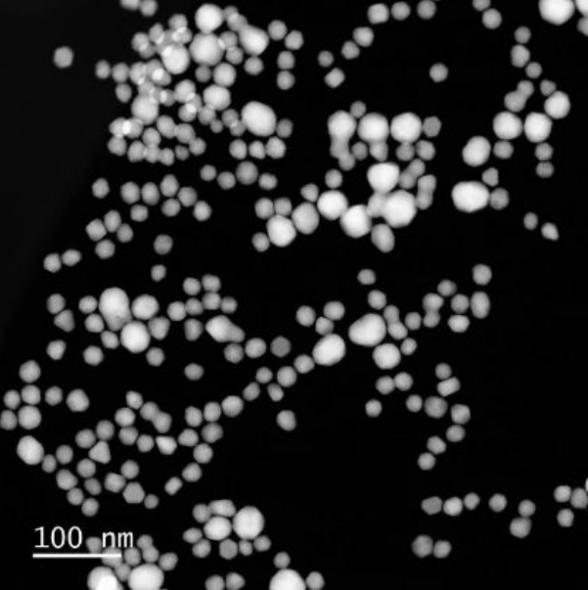
Targeted toward applications where chemical nobility, bio-compatibility, and optical/plasmonic performance are paramount, JG-001 offers an uncompromised gold nanomaterial building block.
- Tunable Concentrations: Supplied in water at customer-specified concentrations ranging from 1 wt% to 50 wt% Au.
- Minimal Additives: Features a minimal polymeric capping agent (~1.5 wt%) with no extra dispersants, yielding ultra-clean formulations.
- Narrow Particle Profile: Average particle size of 20–50 nm with low viscosity (<15 cP even at 50 wt%), making it highly amenable to micro-dispensing and aerosol jetting architectures.
Who Should Be Interested?
Beyond standard conductive traces and interconnects, the tightly controlled 20–50 nm particle size distribution makes JG-001 a strong candidate for several specialized fields:
- SERS & Analytical Spectroscopy Teams: Capitalizing on strong localized surface plasmon resonance (LSPR) to generate electromagnetic “hotspots” for ultra-sensitive trace chemical and biomarker detection.
- Diagnostics & Biosensor Developers: Utilizing optical plasmonic properties for colorimetric reporters in point-of-care rapid diagnostic kits and lateral flow assays.
- Photothermal & Laser-Assisted R&D Groups: Leveraging precise nanoscale light-to-heat conversion for light-driven microfluidic actuation and targeted cell ablation studies.
- Catalysis Research Teams: Taking advantage of the high surface-area-to-volume ratio of sub-50 nm pure gold particles for heterogeneous catalysis and advanced chemical processing.
2. Metalon® JS-ABASEINK-A (Aqueous Silver Base)
View Product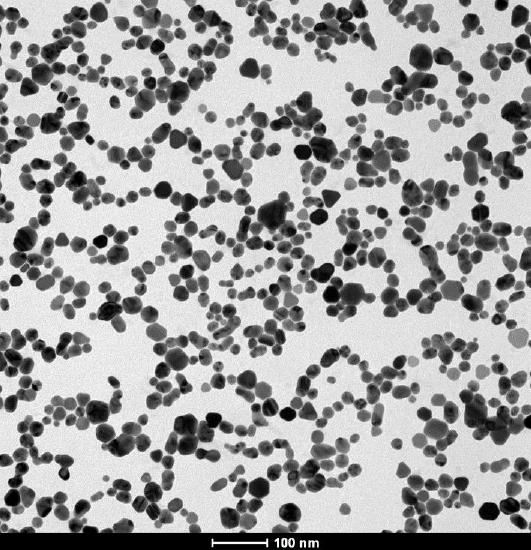
For teams formulating high-performance conductive inks, JS-ABASEINK-A serves as a concentrated, aqueous silver nanoparticle precursor.
- High Metal Loading: Delivered at 55 wt% silver content with a specific gravity of 1.99, enabling formulation flexibility for higher viscosity or dense conductive networks.
- Controlled Particle Size: Features tightly controlled particle sizes of 30–40 nm, optimizing particle packing and low-temperature sinterability.
Who Should Be Interested?
Because of its high metal concentration and sub-50 nm particle profile, JS-ABASEINK-A is tailored for specialized engineering teams:
- High-Density Interconnect (HDI) Packaging Teams: Utilizing the 30–40 nm particle range for clogging-free micro-dispensing, sub-20 µm feature jetting, and micro-LED circuit repair.
- Low-Thermal-Budget & Flexible Electronics Developers: Taking advantage of nanoparticle depression sinterability to process highly conductive traces on temperature-sensitive substrates (PET, TPU, paper).
- RF & High-Frequency Antenna Engineers: Leveraging dense particle packing post-sintering to minimize skin-effect losses in 5G/6G components, RFID, and conformal EMI shielding layers.
- Custom Ink & Formulation Chemists: Using the 55 wt% aqueous concentrate as a clean “masterbatch” to tailor rheology for stretchable electronics, conductive adhesives (ECAs), or specialty aqueous printing processes.
3. Metalon® JR-001 (Carbon Nanoparticle Dispersion)
View Product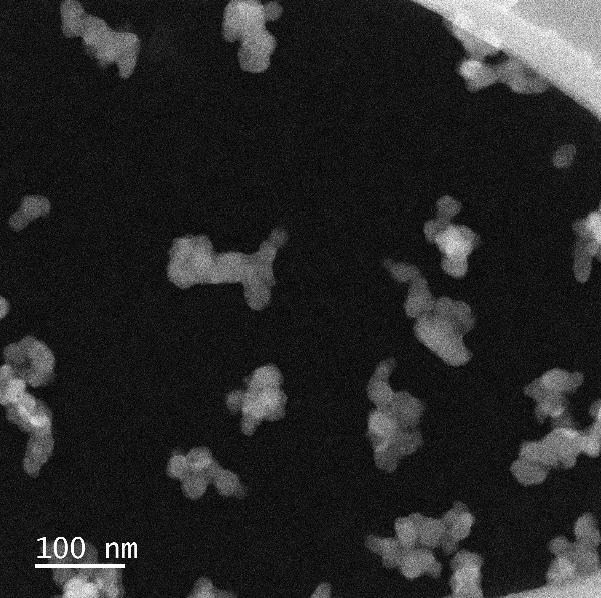
For cost-conscious, highly stable, or non-metallic conductive needs, JR-001 delivers an economical aqueous carbon dispersion.
- Stable Suspension: Contains 10 wt% carbon black (15 wt% total solids) stabilized with a polymeric dispersing agent.
- Low Viscosity: Exhibits a low viscosity profile of 3–5 cP with an average particle size of 110 nm (DLS), ensuring excellent flow behavior and shelf stability.
- Property Target: Features a nominal resistivity of 0.5 Ω-cm, suitable for embedded resistors, antistatic layers, and custom hybrid carbon-metallic formulations.
Business Highlights
NovaCentrix continued its trajectory of sustained momentum through the middle of the year, driven by expanding adoption across advanced electronics manufacturing, research institutions, and emerging functional coatings sectors.
Most notably, Q2 2026 marked our highest revenue quarter in materials sales in company history.
The surge in materials sales underscores a broader industry transition from exploratory R&D toward scalable production, with customers across the globe integrating NovaCentrix formulations into continuous manufacturing lines.
As application requirements demand tighter tolerances, lower curing temperatures, and newer elemental bases (such as gold, and platinum), in addition to more established material systems, our materials team remains focused on offering predictable, high-yield formulations backed by robust technical support.
Research Highlights
Gold Nanoparticles for Paper-Based Clinical Diagnostics
Featured Ink: JG-106 Gold Nanoparticle Ink
Researchers demonstrated the use of gold nanoparticle ink to transform standard paper substrates into highly sensitive electrochemical sensors. The printed device successfully monitors Isoniazid, a tuberculosis drug, showcasing how aqueous gold dispersions enable low-cost, scalable point-of-care clinical diagnostics. Read More
Silver Dispersions for Electro-Conductive Water Filtration
Featured Ink: SPI-508 Conductive Silver Spray Ink
Addressing global water stress and membrane fouling, this study utilized silver nanoparticle dispersions to develop electrified filtration membranes. The application of the silver dispersion provided conductivity and antibacterial properties, presenting a scalable solution for energy-efficient water treatment. Read More
Looking Ahead
As we move through the remainder of 2026, our focus remains on bridging the gap between sophisticated materials science and successful, scalable products. The record materials performance achieved this quarter, together with growing deployment across continuous production environments, reinforces the importance of reliable material properties, tight quality control, scalable synthesis, and close collaboration throughout the development process.
Whether your team is selecting a material base, targeting a specific conductivity or viscosity, refining particle concentration, optimizing deposition and curing parameters, or preparing a process for higher-volume production, our materials engineering and applications teams are available to support your work. Connect with NovaCentrix to share your application requirements, discuss specific performance targets, or begin evaluating a custom formulation with our technical team.
Warmly,
Rudy Ghosh
Vice President of Business and Applications Development
NovaCentrix