Welcome to the fourth issue of the Quarterly Technical Update. In this edition, we showcase our ongoing progress in scaling functional inks from technical validation into high-volume industrial production—a transition accelerated by strong Q3 materials revenue and active engagement across commercial manufacturing workflows.
A key highlight from Q4 was our visit to Berlin in October for the TechBlick conference. The event provided an excellent forum to reconnect with familiar colleagues, align with key suppliers, and establish high-value connections with prospective partners and customers looking to integrate advanced ink solutions into their production lines.
To support this growing commercial demand and offer more cost-effective options, we are excited to introduce two new additions to our screen printable silver-coated copper product line: HPSC-U585 and HPSC-U590. Formulated with 85% and 90% copper loading respectively, these new inks provide lower price points while maintaining high conductivity.
Addressing cost and thermal limits is equally critical for high-speed printing platforms, such as flexographic and gravure printing which are regularly used for UHF and HF RFID antenna manufacturing as well as many other printed electronics applications areas. This leads us to our Product Spotlight section below.
Product Spotlight: Low-Temperature-Curable Flexographic Silver Ink
As printed electronics scale, high-throughput converters face a double challenge: handling heat-sensitive film substrates and constraining conductive ink costs. To solve both, NovaCentrix developed PFI-666LT—a high-performance, water-based silver nanoparticle flexographic ink.
Formulated specifically for low-thermal-budget roll-to-roll (R2R) printing, PFI-666LT delivers two major operational advantages:
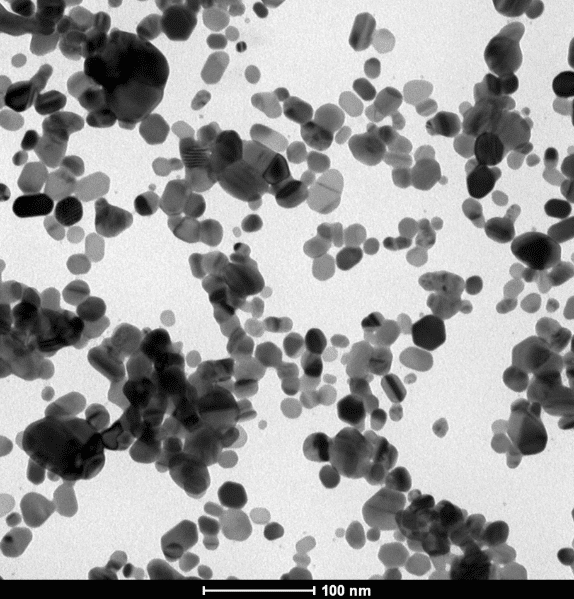
- Low-Temperature Processing: Cures on-press at temperatures as low as 80°C–110°C, unlocking low-cost, heat-sensitive PET and poly substrates without sacrificing conductivity.
- Thinner Deposits, Lower Costs: Maintains excellent trace conductivity at reduced deposit thicknesses, allowing converters to down-gauge ink coverage and significantly trim unit material costs while meeting strict sheet resistance specs.
A quick overview of the electrical properties as a function of curing temperature and time is shown in the table below.
| Water-based, silver nanoparticle flexographic ink PFI-666LT | |||||
|---|---|---|---|---|---|
| Melinex ST505, a type of treated polyester | |||||
| Cure temperature (°C) | 50 | 60 | 80 | 100 | 140 |
| Cure time1 (min) | ≥ 90 | ≥ 60 | ≥ 30 | ≥ 5 | ≥ 5 |
| Weight resistivity2 (gΩ / m^2) | 0.39 (2.3x) | 0.37 (2.2x) | 0.31 (1.9x) | 0.30 (1.8x) | 0.28 (1.7x) |
| Electrical resistivity3 (microOhms cm) | 7.1 (4.4x) | 6.4 (4.0x) | 4.8 (3.0x) | 4.3 (2.7x) | 3.7 (2.3x) |
| Sheet resistance at 1 mil (milliOhms / square) | 2.8 | 2.5 | 1.9 | 1.7 | 1.5 |
1Most tabulated cure times (for a given cure temperature) are shown as a range of times. This is indicated by the use of the “≥” sign. In this range of cure times, the tabulated values of weight and volume resistivity, and sheet resistance at 1 mil are the same.
2The number in brackets for each entry is the weight resistivity value divided by the weight resistivity of bulk silver (at 20°C).
3The number in brackets for each entry is the volume resistivity value divided by the volume resistivity of bulk silver (at 20°C).
Engineered for high-speed flexographic presses, PFI-666LT combines high conductivity with robust post-cure thermal stability. It is currently in final testing phases for adoption in commercial UHF and HF RFID antenna manufacturing, with expanding adoption across high-volume flexible sensors, smart packaging, and disposable medical devices.
Research Highlights
High-Throughput Aerosol Jet Printing for Advanced Thermal Management
Featured Ink: JS-A426 Silver Nanoparticle Ink
Researchers at Iowa State University used NovaCentrix JS-A426 aqueous silver nanoparticle ink to explore higher-throughput aerosol jet printing of high-aspect-ratio structures. A heated bubbler helped stabilize the ink, while in-line heating limited spreading at higher deposition rates. The researchers demonstrated the approach by printing silver thermal fins directly onto silicon chips, reducing thermal resistance by approximately 69% under forced convection compared with a bare control chip. Read More
All-Inkjet-Printed Microneedles for Advanced Biosensing
Featured Ink: JS-A102A Silver Nanoparticle Ink
Researchers used NovaCentrix JS-A102A silver nanoparticle ink to fabricate conductive microneedles entirely through inkjet printing. Deposition onto a heated substrate enabled the formation of mechanically stable, conductive structures without a separate post-printing thermal or photonic treatment. The team demonstrated in-vivo impedance measurements on mint leaves, highlighting a route to printed biosensing tools for plant monitoring and precision agriculture. Read More
Roll-to-Roll Printed Sensors for Scalable Diagnostics
Featured Ink: PFI-600 Silver Nanoparticle Ink
Researchers at the University of Toronto Mississauga used NovaCentrix PFI-600 aqueous silver nanoparticle ink to fabricate electrodes for hydrogen peroxide sensing through roll-to-roll flexographic printing. The process produced 2,000 electrodes on PET in less than 30 minutes, demonstrating a scalable approach to printed sensor manufacturing. This work shares the PFI-666LT spotlight’s focus on flexographic printing and polymer substrates, while using PFI-600 with an infrared cure at 150°C. Read More
Looking Ahead
As we look ahead to 2027, our focus remains on helping customers address the practical challenges of bringing printed electronics into production. PFI-666LT and the new HPSC-U585 and HPSC-U590 inks reflect two important priorities in this work: reducing thermal demands on sensitive substrates and balancing conductivity with material cost. Progress in each area depends on close collaboration, with ink selection, printing conditions, and curing processes developed around the requirements of the application.
Whether you are evaluating a new substrate, refining an antenna or sensor design, or preparing a printing process for higher-volume production in the year ahead, our materials engineering and applications teams are available to support your work. Connect with NovaCentrix to share your performance targets, discuss processing constraints, or begin evaluating an ink for your next development program. We look forward to continuing the technical dialogue and working with you on the challenges and opportunities that 2027 will bring.
Warmly,
Rudy Ghosh
Vice President of Business and Applications Development
NovaCentrix